Both FamilyMart and Decathlon Seek Them Out: KiWi New Energy Uses AI Models to Bring Green Power into Daily Operations
As renewable energy rapidly expands, from retail stores to international brands, AI has become the key tool to overcome bottlenecks in the distribution, dispatch, and governance of green electricity — letting every kWh truly enter daily operations and create quantifiable carbon reduction benefits.
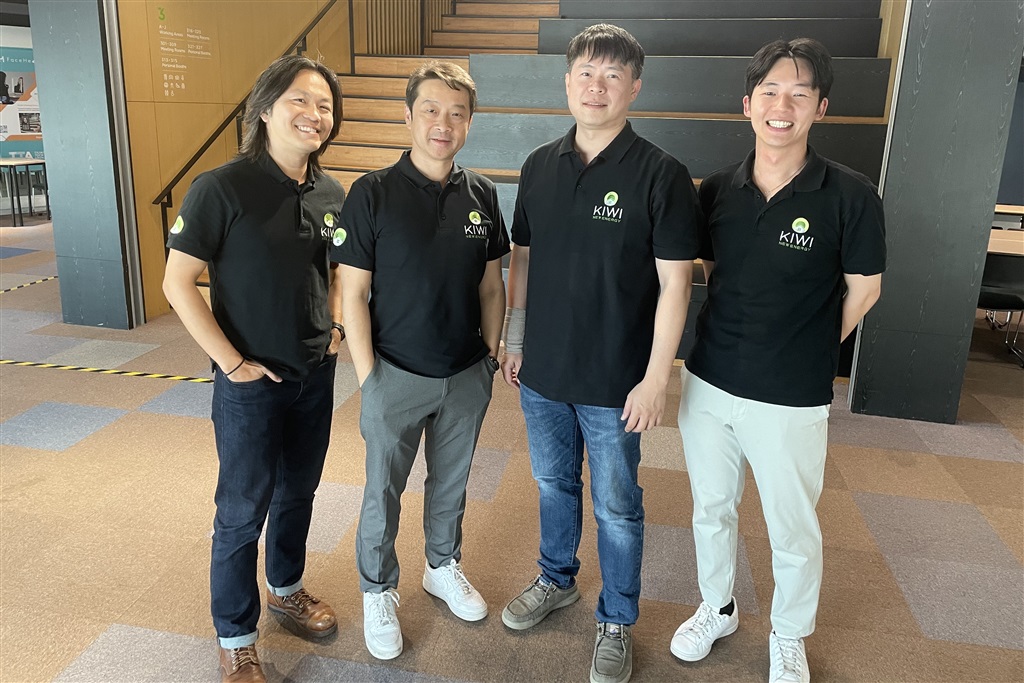
As the global energy transition gradually enters deep waters, coupled with the rapid development of AI applications, electricity demand continues to climb, making the efficient management of energy the key to a new round of competition. To this end, KiWi New Energy held the "2026 AI Green Energy Developer Conference" on January 20th, publicly revealing its overall blueprint for deploying an "Energy Brain" for the first time. Steve Huang (Huang Weizhe), Founder and CEO of KiWi New Energy, pointed out that as the installed capacity of renewable energy grows rapidly, market competition is no longer just about who "generates more," but has returned to who can "calculate electricity more accurately, dispatch it more instantly, and use it more efficiently."
"Our advantage is that we calculate more accurately and in real-time than others." In his speech, Huang shared his past work experience at NVIDIA, tying it back to the premise that the key to a company's long-term foothold in the market is whether it has built a true "technological moat."
He stated bluntly that for platform-based energy services to go far, they must possess scalable computing power and real-time decision-making mechanisms, allowing energy to be analyzed, predicted, and even traded just like data. KiWi New Energy uses AI technology to integrate green electricity on the supply side, behind-the-meter energy storage, and behavioral patterns on the consumption side, creating an "Energy Operating System" that can be dispatched in real-time.
Building an Energy Computing Brain to Turn "Every kWh" into a Smart Asset
In his speech, KiWi New Energy COO Li Chenfan cited statistics from the Energy Administration, pointing out that as of October 2025, Taiwan's installed renewable energy capacity reached 22,350 MW, with an annual power generation of approximately 28.9 billion kWh, showing double-digit growth. If converted into carbon benefits, this reduces carbon dioxide emissions by about 1.21 million tons annually.
Faced with the continuous expansion of green energy infrastructure, Li pointed out that the key is no longer just building another power plant, but how to transform previously decentralized green electricity into commercialized power services that can be precisely matched, traced, and adjusted in real time.
He further highlighted the pain points of the current market structure. First, the flow of green electricity in Taiwan is highly concentrated, with nearly 90% absorbed by major tech companies, while chain retailers account for about 7%, and SMEs and residential users together make up less than 1%. Second, on the supply side, another contradiction has emerged: some developers hold surplus electricity but struggle to find suitable buyers due to limited long-term contract capacity and severe price fluctuations, creating a structural imbalance of "having electricity but unable to sell it, wanting to buy but unable to get it."
Therefore, KiWi New Energy positions itself as a "Green Energy Trading and Energy Management Platform based on AI." Its core is not a single procurement or sporadic energy-saving measures, but using models to learn the power consumption profiles of different business types, further completing supply-demand matching, energy storage strategy planning, and optimizing electricity usage periods, ensuring green electricity is used where it is most needed. Huang described this as KiWi New Energy's core competitiveness: transforming complex power issues into computable, decision-making models, making "every kWh of electricity smarter."
From FamilyMart to Decathlon: Precise Green Power Usage Reduces Carbon by 474 Tons
KiWi New Energy's growth is not a solo endeavor but is built on a cross-industry collaboration ecosystem. Li noted that current partners span nine major industry sectors, including chain retail, restaurant groups, and commercial office buildings, with the collaborations with FamilyMart and Decathlon attracting the most attention.
Taking FamilyMart as an example, since KiWi New Energy introduced its system to the first batch of 100 stores in 2024, average store energy efficiency has improved by 6-8% through smart energy management and power optimization. As of November 2025, FamilyMart's overall green electricity coverage exceeded 10%, expanding to 1,200 stores before the end of 2025, with a target of reaching over 3,000 stores cumulatively by the end of 2026. As the scale of implementation expands, the goal is to push this to 7,200 stores by 2050, laying the foundation for a comprehensive energy transition.
"We can accurately calculate which stores need one Tesla Powerwall 2, which need three, and even which ones actually don't need any," Huang explained. What KiWi New Energy does is not simply buying and selling green electricity, but real-time allocation and smart regulation of power. When the store scale expands to thousands of locations and electricity usage is settled every 15 minutes, the platform must instantly determine which stores have "virtual" power usage or the risk of exceeding their contracted capacity, integrating scattered green energy and storage resources into a "real-time dispatchable energy portfolio" to maximize energy efficiency.
Compared to FamilyMart's single-point rollout, KiWi New Energy's collaboration with Decathlon is more like a "replicable experiment." KiWi integrates AI energy management, REC (Renewable Energy Certificate) traceability, and diverse renewable energy sources into a complete solution, allowing international brands to actually land in the Taiwan market and possess the conditions for expansion.
Decathlon has now fully implemented the KiWi system across its 8 main independent-metered stores in Taiwan, officially using green electricity since March 2025. The current renewable energy usage ratio has reached 70%, becoming a rare high-percentage case in the retail industry.
Decathlon also plans to build rooftop solar photovoltaics at its Nantun headquarters in Taichung starting in 2026, combined with energy storage equipment and demand response regulation, gradually expanding to its stores and logistics warehousing system to advance toward the RE100 target across Taiwan by 2030. KiWi New Energy further calculated that every additional 1 million kWh of green electricity used brings about 474 tons of CO2 equivalent carbon reduction benefits, providing a specific, quantifiable basis for enterprises regarding Scope 2 and supply chain carbon reduction.
When explaining the cooperation strategy, Huang pointed out that KiWi New Energy is not targeting clients who "treat green energy as a KPI," but rather those sites that face actual daily power usage pressure and require real-time dispatch. Precisely because retail and catering locations are scattered, settlements are frequent, and power usage patterns vary greatly, AI precise matching and real-time regulation can truly demonstrate value, transforming green electricity from numbers on a report into perceptible resources in operations.
There is No Shortage of Green Power, So Why Can't We Buy It? Three Bottlenecks
Despite the continuous growth in renewable energy supply, Li bluntly stated that for green electricity to move from being a "procurement item for a few large enterprises" to a "daily option for the majority of users," it remains stuck at three key bottlenecks.
First is the excessive concentration of the market structure. Currently, the flow of green electricity is highly dependent on a few large enterprises, causing SMEs and residential users to face a long-term dilemma of "wanting to use but unable to buy." For developers, a client base that is too uniform means higher negotiation pressure and price fluctuation risks, leaving the overall market lacking flexibility.
Second is the mismatch between transaction thresholds and cost structures. Traditional green electricity trading often requires large contract volumes and bargaining power. Even if small and medium-sized users are willing to use it, it is difficult to actually enter the market. Li pointed out that based on the scale of Taiwanese enterprises and residential/commercial users, the potential serviceable market is much higher than the current actual usage; however, users who actually adopt time-of-use pricing and possess data-driven management conditions remain a minority, indicating that while the green electricity market is still in its early stages, it lacks a key role capable of effectively integrating supply and demand.
The third is the technological challenge of real-time computing and dispatch capabilities. Using a 15-minute settlement interval as an example, Huang explained that a single user generates 2,880 power usage data points a month. When a platform serves thousands of locations simultaneously, the volume of data that must be processed and analyzed in real-time rapidly accumulates to the millions, posing an immense test to system computing and reaction speed.
Huang pointed out that facing such a scale, energy platforms cannot rely solely on cloud computing but must move towards a "Cloud-Edge Integration" architecture. Partial analysis and judgment are completed instantly at the edge, while the cloud handles larger-scale model learning and collaborative decision-making. Therefore, KiWi New Energy is simultaneously deploying infrastructure capable of supporting energy AI computing and evaluating the construction of an energy-specific data center to meet future larger-scale power data processing needs.
Furthermore, Huang revealed that NVIDIA began planning its "AI Energy" related initiatives as early as five years ago. One of the core directions is moving AI capabilities forward to the grid edge, allowing devices like smart meters to perform real-time computing and forecasting locally, assisting regional grids with supply-demand balancing and dispatch judgments. This also confirms the trend of energy systems moving towards intelligent and decentralized development in the future.
Breaking the Dilemma of Decentralized Green Power: Building an Open Platform to Integrate Generation and Consumption
Facing the structural bottlenecks of the green electricity market, KiWi New Energy chose an "Open Platform" as its core solution. Huang pointed out that KiWi New Energy does not intend to become an all-encompassing energy company handling generation, retailing, and engineering. Instead, it hopes to act as the "Energy Brain." Through platform mechanisms, power generation companies, electricity retailers, system integrators, and consumers can all complete matching, management, and real-time dispatch within the same system, each leveraging their own strengths.
Under this architecture, KiWi New Energy has initiated API integration and technical-level cooperation with Tesla Energy, enabling behind-the-meter storage, real-time backup, and future demand response services to be scalable and expandable. Huang stated that, looking at the international market, KiWi New Energy estimates the global green electricity trading scale is expected to exceed $200 billion by 2030, with the demand from enterprises having substantial rigid power needs at about $30 billion. Capturing just 10% of this represents a growth space in the billions of dollars.
In conclusion, Huang stated that only when energy can be analyzed in real-time, accurately predicted, and effectively traded like data, can green electricity truly enter daily operations and life scenarios. "KiWi Making every kWh more intelligent" is not just a slogan; it is the hope that through an AI platform, green electricity can transform from an exclusive option for a few large enterprises into an energy ecosystem in which retail, SMEs, and even ordinary households can participate.
Reference: This article is reproduced with authorization from "ESG Global Views". The original title "KiWi Lets Green Power Enter Daily Operations, Building Power Decision Models with AI" is not subject to CC Creative Commons licensing terms. Source: Environmental Information Center.
Related Articles
KiWi at SEMI's AI & Net-Zero Dual Transformation Forum: Dr. Wei-Che Huang Joined as Featured Speaker
On June 17, KiWi founder and CEO Dr. Wei-Che Huang joined SEMI's AI & Net-Zero Dual Transformation Forum as a featured speaker, sharing how AI energy orchestration can help enterprises turn power from a bottleneck into a strategic enabler for decarbonization and industrial upgrading.
KiWi Selected for Startup Terrace IP2 ScaleOut: Landing the AI Energy Operating System in the US
KiWi New Energy has been selected for Startup Terrace's IP2 ScaleOut program — a market-entry initiative that helps Taiwan's most globally-ready startups establish operations, customers, and partnerships in the United States. The kick-off meeting took place last Friday, marking the official start of KiWi's structured US scale-out plan for the AI Energy Datacenter (AI-EDC).