01Power availability & capacity
- Problem
- Expansion needs may exceed available capacity.
- Data
- Contract capacity, connection conditions, historical peaks.
- Decision support
- Compare capacity scenarios and expansion constraints.

KiWi Core Technology / AI-EDC
Connect supply-demand analysis, renewable matching, storage collaboration and traceable records through the AI-EDC energy data architecture—supporting energy planning and operational decisions for AI data centers.
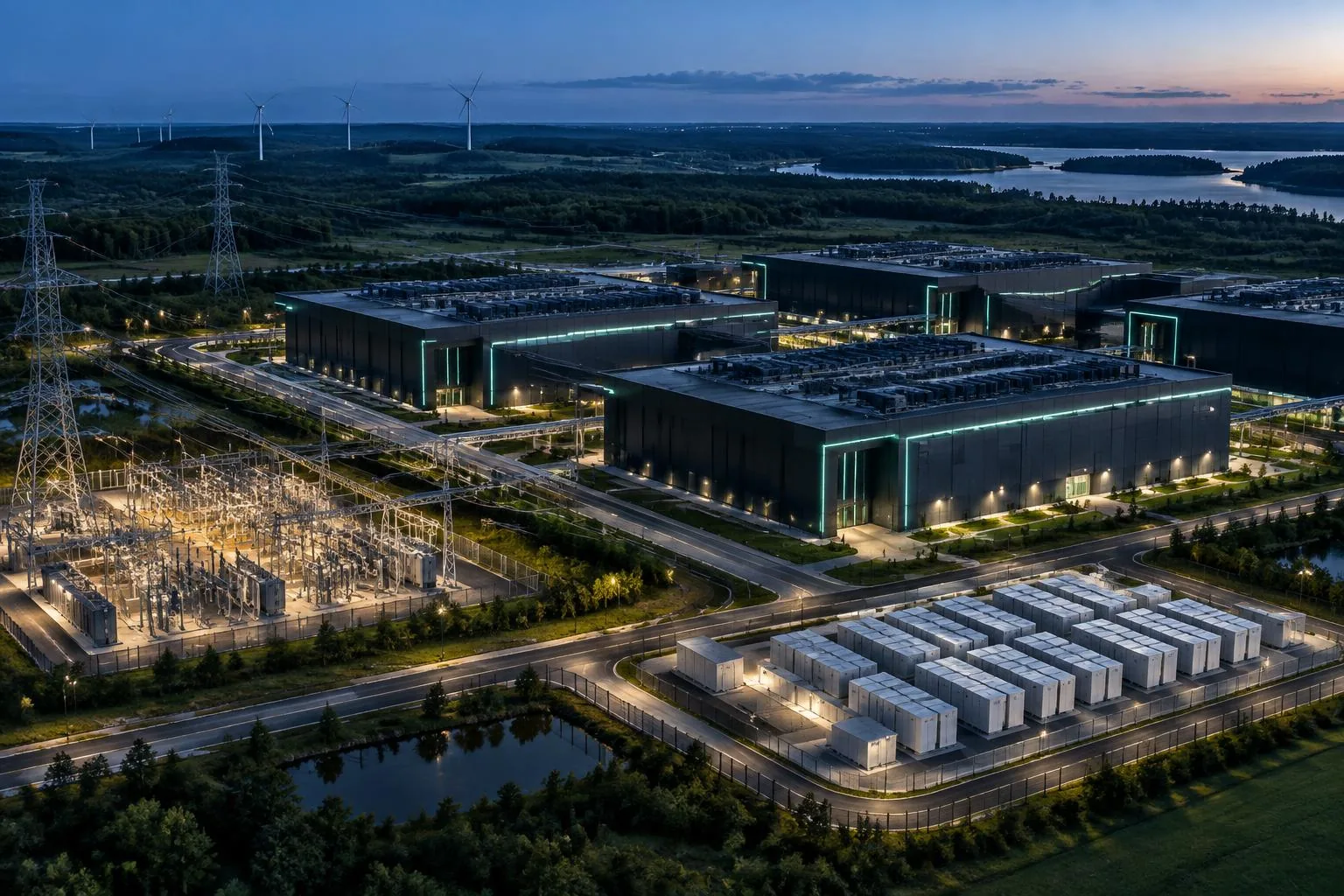
Concept artwork · Not a KiWi-owned facility or actual customer site
AI-EDC means AI Energy Data Center. The existing technical framework and retail evidence or simulations do not establish AI data center production capability. This page presents an application and field-validation direction.
01 / AI-EDC
Compute load is only the starting point. Supply, facilities, contracts and records need a shared energy perspective.
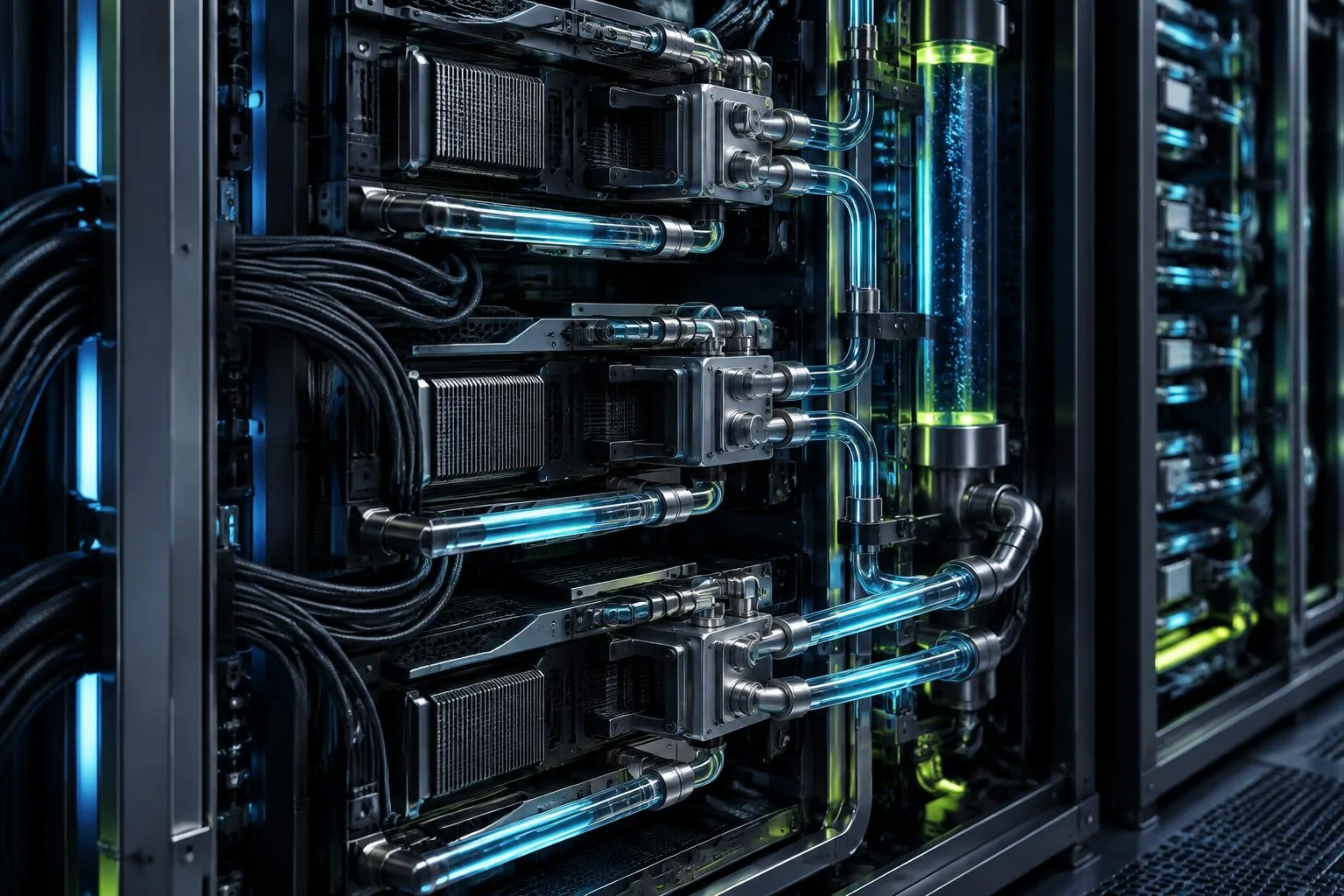
GPU, cooling and UPS are data and operational context—not claims that KiWi directly controls them.
02 / AI-EDC
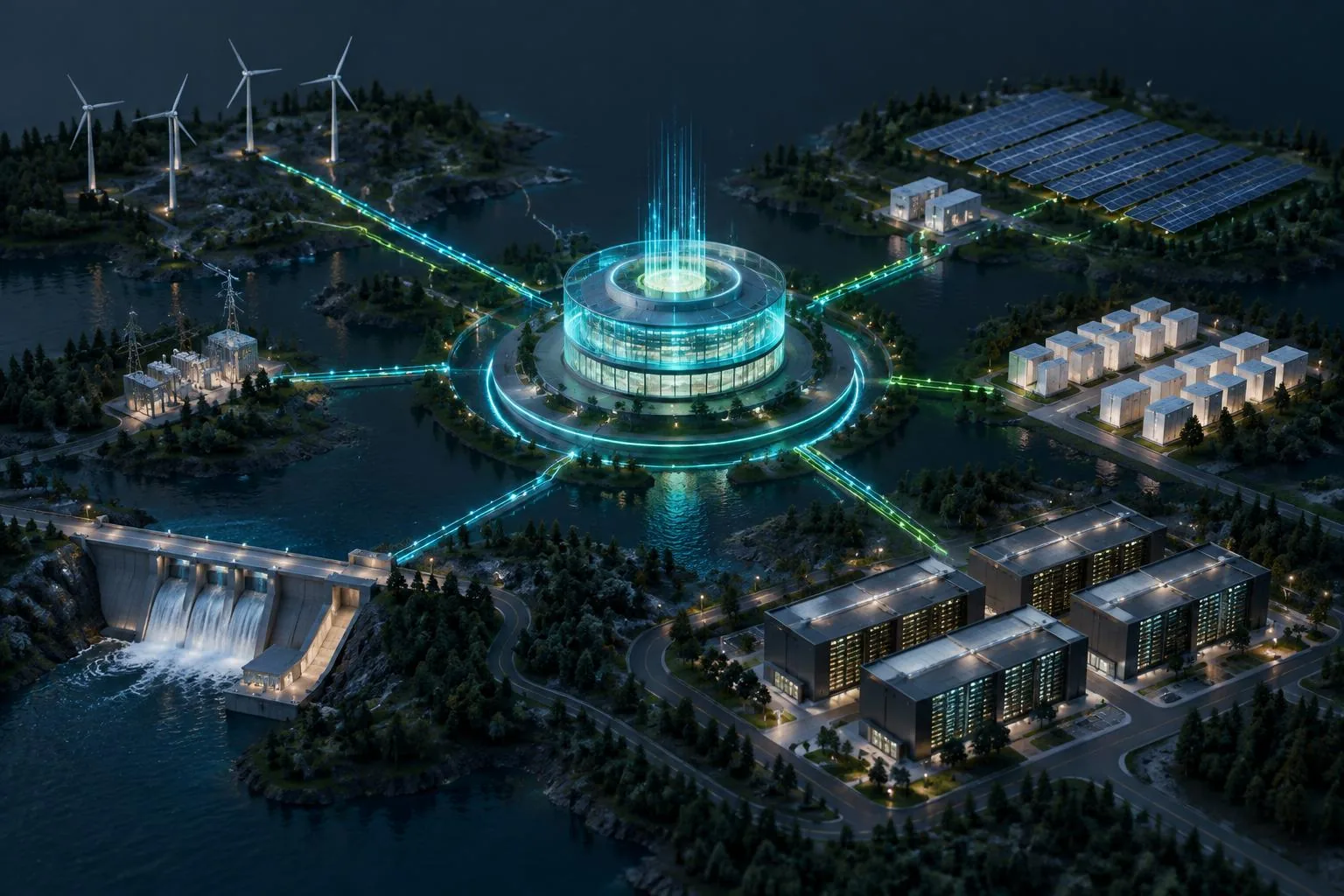
The existing AI-EDC technical abstraction extends toward AI data center validation. Explicit inputs, processes and outputs connect each layer.
Authorized data integration and analysis—not physical electricity movement.
Determined by the grid, equipment and applicable contracts; illustrated links are not a delivery commitment.
Requires compatible devices, permissions, integration and field validation; decision support is the default.
Cloud / edge collaboration depends on compatibility, permissions, integration and field validation. The AI data center application must not be read as an established production deployment.
03 / AI-EDC
Align consumption, supply, status and contract data.
Compare load forecasts, supply windows and constraints.
Provide scheduling / exchange decision support for authorized teams or systems.
Retain sources, decision versions and execution feedback.
15 minutes is a planning / data granularity—not a guarantee of forecast accuracy, control response time, autonomous physical dispatch or reliability. “Dispatch & Exchange” means decision support unless a compatible, authorized system is field validated for control within the project scope.
04 / Concept interface / Demo data
Synthetic scenarios—not live customer data, actual facilities or quotations, and not verified savings. Power is in MW; interval energy is in MWh. Times refer to local time on a demo day.
13 MW = 7 + 6 + 0 MW / 12:00–12:15
Load = renewables + grid + storage discharge. Demo storage capacity: 10 MWh; discharge efficiency: 95%. SOC drop = discharge MW × 0.25 h ÷ 0.95 ÷ 10 MWh × 100. Each interval is an independent scenario, not a continuous dispatch commitment.
| Time | Load (MW) | Renewables (MW) | Grid supply (MW) | Storage discharge (MW) |
|---|---|---|---|---|
| 08:00 | 12 | 2 | 10 | 0 |
| 10:00 | 12.5 | 5 | 7.5 | 0 |
| 12:00 | 13 | 7 | 6 | 0 |
| 14:00 | 13 | 6 | 7 | 0 |
| 16:00 | 12.5 | 3 | 8.5 | 1 |
| 18:00 | 12 | 1 | 10 | 1 |
Synthetic scenarios—not live customer data, actual facilities or quotations, and not verified savings. Power is in MW; interval energy is in MWh. Times refer to local time on a demo day.
05 / AI-EDC
Align IT, facility and supply data to identify gaps and dependencies.
Compare supply, storage constraints and load windows for conditional coordination planning.
Compare reviewable cost and risk scenarios with explicit assumptions and contract constraints.
Retain sources, versions and decision evidence for record preparation—not certification or reporting compliance guarantees.
KiWi New Energy
Discuss data availability, integration boundaries and validation scope with KiWi to define a reviewable next step.